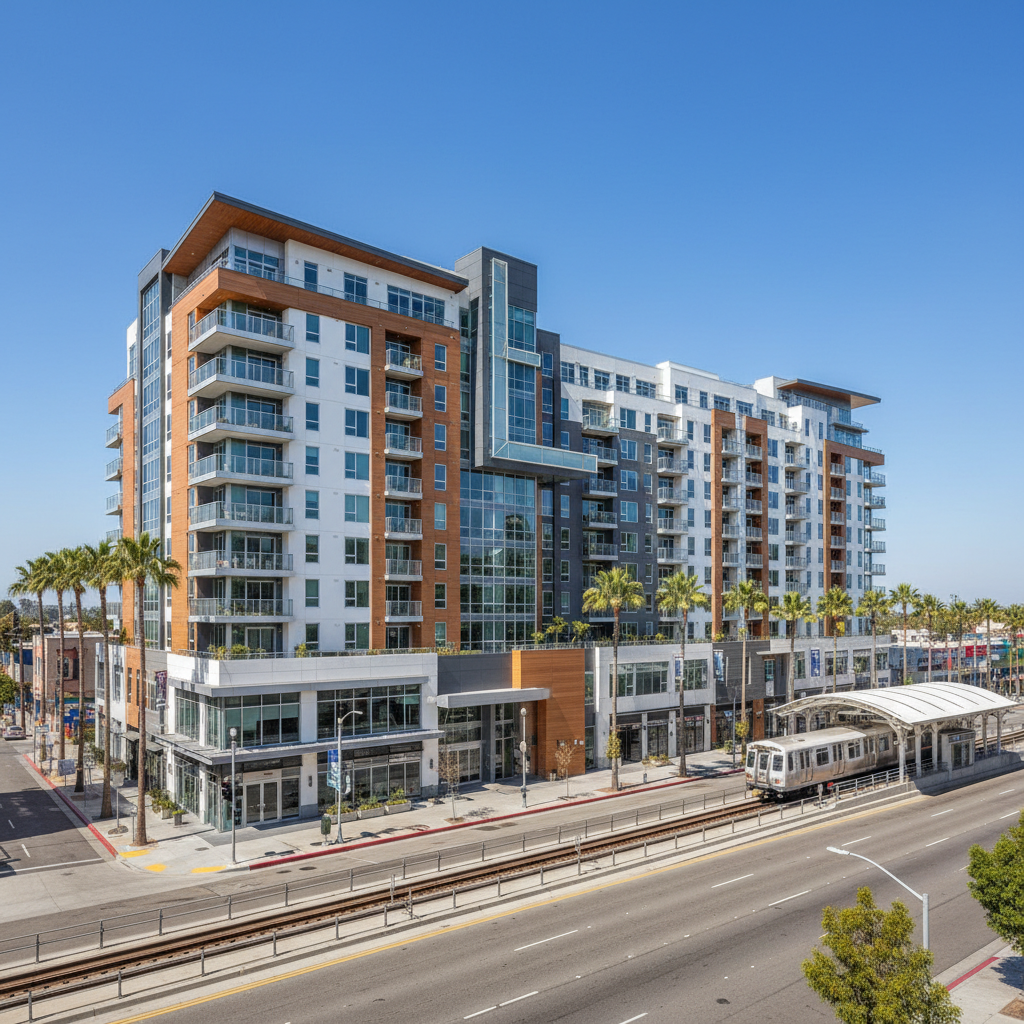
The 2026 Assessment Schism: Negotiating Legacy vs. New Acquisitions
MK Property Management
July 1, 2026
8 min read
Share this article:
Introduction: The Growing Fiscal Divide in Southern California Real Estate
As we navigate the spring of 2026, Southern California real estate investors are standing at a historic crossroads. The debate over property tax reform has reached a fever pitch with the upcoming "Save Prop 13" ballot measure, a movement designed to cement the protections of the 1978 landmark legislation while highlighting a growing "fiscal schism." For property owners in Los Angeles, Orange County, and the Inland Empire, this isn't just a political debate—it is an operational crisis. We are seeing a widening gap between "legacy" properties held for decades and new acquisitions purchased at current market valuations.
In regions like San Diego and Riverside, the disparity is staggering. A legacy multi-family asset might be paying taxes based on an assessment from the late 1990s, while the new apartment complex across the street, recently purchased for
0 million, is hit with a tax bill that is five to ten times larger. This "Assessment Grandfather Clause" creates a competitive imbalance that requires a sophisticated management strategy. At McIntire Kingstone, we are helping our clients navigate this 2026 fiscal schism by implementing strategic leasing, transparent disclosure, and rigorous due diligence.
1. Analyzing the 2026 'Save Prop 13' Measure and Multi-Family Portfolios
The 2026 ballot measure aims to protect the 1% cap on assessed value and the 2% annual increase limit. However, the external pressure to abolish property taxes entirely—as some advocates in the Orange County Register and Daily Bulletin suggest—has created a climate of uncertainty. For multi-family portfolio owners, the primary risk isn't just the tax rate, but the reassessment upon transfer.
The Wealth Gap in Assessments
Under current law, a property’s value for tax purposes is reset only when it changes ownership. As property values in Southern California have risen at an annualized rate of over 5% since the 1980s, the gap between market value and assessed value has become a chasm. In Los Angeles County, it is now common to see a
.3 million home paying only $3,000 in taxes because of decades of ownership, while a new buyer would immediately face a
3,000+ annual assessment. For multi-family investors, this means that two identical 10-unit buildings in Long Beach can have wildly different Operating Expense (OpEx) ratios purely based on their acquisition date.
Portfolio Rebalancing and the 'Lock-in' Effect
The 2026 legal climate is encouraging a "lock-in" effect. Owners of legacy assets are hesitant to sell or perform 1031 exchanges because the tax-delta of a new acquisition in a high-growth area like Irvine or Temecula would destroy their cash flow. If you own a portfolio of aging assets in San Bernardino, the temptation to trade up to a newer build in Orange County is tempered by the reality that your property tax liability could spike by 800% overnight.
2. The 'Tax Stasis' Strategy: Structuring Leases Around Low Liability
If you are fortunate enough to own a legacy property with a suppressed tax base, you possess a significant competitive advantage. However, leveraging this advantage requires a "Tax Stasis" strategy to ensure you aren't leaving money on the table while maintaining a defensive posture against future tax volatility.
Competitive Pricing vs. Margin Growth
With a tax liability that is significantly lower than your competitors, you have two choices: undercut the market to ensure 100% occupancy or match market rents and reinvest the "tax savings" into capital improvements. In the current 2026 Southern California market—marked by high insurance premiums following the State Farm rate hikes—legacy owners are using their tax advantage to offset the rising costs of property insurance and utilities.
Modified Gross and NNN Considerations
For commercial and mixed-use properties in areas like the Inland Empire, structuring leases to account for this tax disparity is critical. If your property tax is artificially low, a Triple Net (NNN) lease might actually make your space more attractive to tenants because their pass-through costs are lower than the building next door. Conversely, if you expect a reassessment (perhaps due to a planned transfer or partnership change), you must structure leases with specific language regarding the pass-through of "supplemental taxes" to avoid being stuck with the bill yourself.
Market-Adjusted T-I Allowances: Use your tax savings to offer higher Tenant Improvement (TI) allowances, attracting premium tenants without lowering your base rent.
Reserve Seeding: Allocate a portion of the "tax delta" (the difference between your tax and the market average) into a deferred maintenance reserve to hedge against the day the property is eventually reassessed.
Rent Stability: In rent-controlled jurisdictions like certain parts of Los Angeles or Santa Ana, legacy tax bases allow owners to absorb the 2-3% annual rent caps more comfortably than new acquirers.
3. Legal Compliance: Handling Tenant Inquiries on Tax Disparities
Transparency is becoming a legal and relational necessity in 2026. Tenants are more informed than ever; they can look up property tax records on the county assessor’s website. When a tenant at a newly acquired building in Anaheim realizes they are paying higher "Common Area Maintenance" (CAM) fees due to a property tax reassessment compared to a friend in an older building, conflict arises.
The Transparency Mandate
We recommend property owners and managers provide a "Budget Transparency Letter" during the lease signing or annual CAM reconciliation process. This document should clearly outline that property tax assessments in California are determined by the date of acquisition under Proposition 13. Explaining this legal reality proactively prevents the perception that the landlord is "price gouging" in newer buildings.
Fair Housing and Pass-Throughs
In California, specifically under the California Tenant Protection Act (AB 1482), there are limits on how certain costs can be passed through to residential tenants. However, property tax increases due to a sale are generally treated as a standard operating expense in the commercial sector. In the residential sector, if you are applying for a "fair return" rent increase petition in a rent-controlled city like Santa Monica, you must be prepared to show that the property tax increase was a mandatory legal assessment and not a voluntary expense.
Actionable Step: The Disclosure Clause
Include a specific clause in your management agreements and leases that addresses Supplemental Tax Assessments. When a property is purchased in Southern California, the new owner often receives a supplemental bill months later. Clarifying who is responsible for this "catch-up" bill is essential to avoiding litigation between buyers, sellers, and tenants.
4. Operational Risk: Forecasting a 'Post-Property Tax' California
While the "Save Prop 13" measure is popular, the editorial push to "Abolish Property Taxes" (as seen in recent 2026 reports) suggests a radical shift might be on the horizon. If California were to move away from traditional property taxes, how would local municipalities fund services? The likely answer is Local Fee-Sharing and Parcel Taxes.
The Rise of the Local Fee
In cities like San Diego and Los Angeles, we are already seeing an increase in "special assessments" and parcel taxes that bypass the Prop 13 caps. These are often used for school bonds, fire prevention, or homelessness initiatives. Unlike ad valorem taxes, these are typically flat fees. For property managers, this shifts the burden to tracking dozens of small line items on a tax bill rather than one large percentage.
Pivoting Management Contracts
Property management contracts must be updated to include "Legislative Pivot Clauses." If the state replaces property taxes with a different mechanism—such as a higher state income tax or a land value tax—your management agreement should allow for a renegotiation of how these costs are accounted for in the property's Pro Forma. To help our clients, McIntire Kingstone stays ahead of these legislative shifts, ensuring that your management fees and tenant pass-throughs remain legally compliant regardless of the tax structure.
Insurance Volatility as the New Tax
As property taxes remain capped for many, insurance premiums have become the new "uncontrollable expense." With State Farm receiving a 17% emergency rate hike in early 2026, the combined burden of taxes and insurance is squeezing margins. Property owners must treat insurance due diligence with the same rigor as tax assessment due diligence.
5. Strategic Acquisition: The 'Tax-Delta' Due Diligence
The most dangerous mistake a Southern California investor can make in 2026 is performing a Pro Forma based on the *seller's* current tax bill. If the seller has owned the building since 1995, their tax bill is a fairy tale. Your reality will be a cold shower the moment the Los Angeles or Orange County Assessor realizes a sale has occurred.
Calculating the True Cost of New Purchases
Before closing on a property in the Inland Empire or San Diego, you must perform a 'Tax-Delta' analysis. This involves:
Verified Assessment Projection: Take the purchase price and multiply it by the local tax rate (roughly 1.1% to 1.25% including local bonds). Ignore the seller's $4,000 bill; if you are buying for $4 million, your new bill is $44,000+.
Mello-Roos and Special Assessments: Many newer developments in Riverside and San Bernardino counties have Mello-Roos fees that don't expire for 30 years. These do not fall under the Prop 13 cap and must be calculated separately.
Step-Up Basis Scenarios: If you are inheriting a property or entering a partnership, consult with a California tax attorney to see if a "change in ownership" is triggered. Recent changes to intergenerational transfer laws (Prop 19) have made this much more complex.
Ensuring the Asset Isn't 'Underwater'
An asset that looks like a 6% cap rate on the seller's books can quickly turn into a 4% cap rate once the first
3,000+ assessment hits. This is the difference between a profitable investment and a cash-flow drain. At McIntire Kingstone, we provide our clients with comprehensive acquisition modeling that accounts for these "Supplemental Tax Shocks."
Practical Advice for Current Owners:
Audit Your Tax Bill: Ensure you aren't being double-billed for local assessments that have expired.
Appeal Over-Assessments: If the 2026 market sees a localized dip in values in specific neighborhoods, file an appeal with the County Assessment Appeals Board immediately.
Consult Management: Before acquiring a new multi-family asset, have your property management team run a localized expense comparison to see how the new tax bill will affect your vacancy-adjusted NOI.
Establishing Expertise in a Shifting Landscape
Managing property in Southern California in 2026 requires more than just collecting rent and fixing leaky faucets. It requires a deep understanding of the legal and fiscal mechanisms that govern our state. Whether you are holding a legacy asset in the heart of Los Angeles or looking to acquire a new development in the Inland Empire, the Assessment Grandfather Clause will define your financial success.
At McIntire Kingstone, we specialize in maximizing the value of your portfolio by navigating these complex tax landscapes. We don't just manage properties; we manage your investment's future. As the "Save Prop 13" movement continues to evolve, we will be here to provide the actionable insights and professional management Southern California landlords deserve.
MK Property Management
The McIntire Kingstone team brings decades of combined experience in property management, real estate investment, and tenant relations.
 .5B Bets on the SoCal Rent Silence" class="w-full h-40 object-cover transition-transform duration-300 group-hover:scale-105" loading="lazy"/>