The Institutional Paradox: Decoding the .5 Billion SoCal ShiftIn the spring of 2026, the Southern California rental market presents a curious contradiction. To the casual observer scanning headlines in the Los Angeles Times or the Orange County Register, the narrative seems clear: rents are softening, vacancies are ticking upward in places like the Inland Empire, and the post-pandemic housing frenzy has finally met its cooling point. However, beneath this surface-level 'stagnation' lies a massive,
.5 billion institutional counter-move. While smaller landlords may feel a sense of trepidation, the world’s most sophisticated capital is aggressively positioning itself for what industry insiders call the '2027 Horizon.'At McIntire Kingstone, we monitor these shifts across Los Angeles, Riverside, and San Diego daily. We are currently witnessing a phenomenon we call 'The Institutional Echo.' It is the sound of major firms like Camden Property Trust and other institutional giants rebalancing their portfolios—not because they lack faith in California, but because they are preparing for a massive legislative and economic shift that will redefine property values by the end of the decade. For the private investor in Southern California, understanding this 'silence between the rent breaths' is the key to transitioning from a defensive posture to an offensive, wealth-building strategy.
1. Analyzing the '2027 Horizon': Why Stagnation is a 'Buy the Dip' Window
The current 2026 data shows rent growth hovering near zero, and in some submarkets of San Bernardino and Riverside, we’ve even seen slight retreats. To a short-term thinker, this looks like a decline. To institutional logic, this is a 'coiled spring.' The 2027 Horizon represents the point where the current glut of supply—largely the result of projects greenlit during the 2021-2022 boom—is fully absorbed, and the structural deficit of California housing returns with a vengeance.
The Supply-Demand Mismatch
Institutional investors are betting on the fact that California remains one of the most supply-constrained markets in the world. While 2025 and 2026 saw a modest increase in delivered units, the pipeline for 2027 and 2028 has slowed significantly due to high interest rates over the past 24 months. When the current inventory is absorbed, there will be a vacuum of new product. Investors moving
.5 billion into the region today are securing a lower entry price based on today's 'breathing' rents, knowing that the structural lack of housing will force a sharp upward correction in valuations within 18 to 24 months.Yield Compression vs. Long-Term Appreciation
While cash flow might be squeezed in the immediate term, institutional players prioritize total return. In Southern California, the appreciation potential of a stabilized multifamily asset often outweighs the temporary loss in monthly NOI (Net Operating Income). For a private owner in Orange County or San Diego, following this institutional lead means resisting the urge to sell during a flat cycle and instead focusing on asset preservation and minor capital improvements that will pay dividends when the market re-accelerates in 2027.
2. Strategic Wiggling: How SB 79’s Rezoning is Creating a 'Property Value Gold Rush'
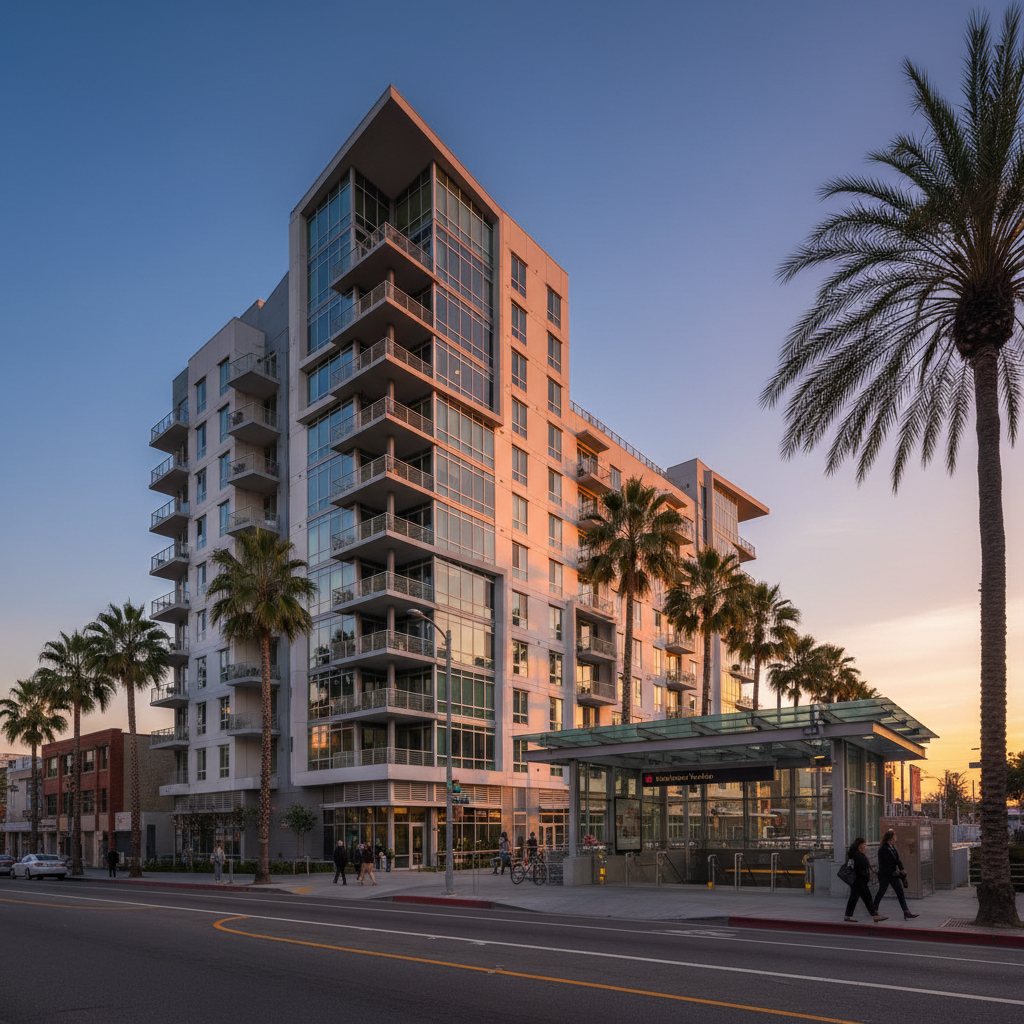
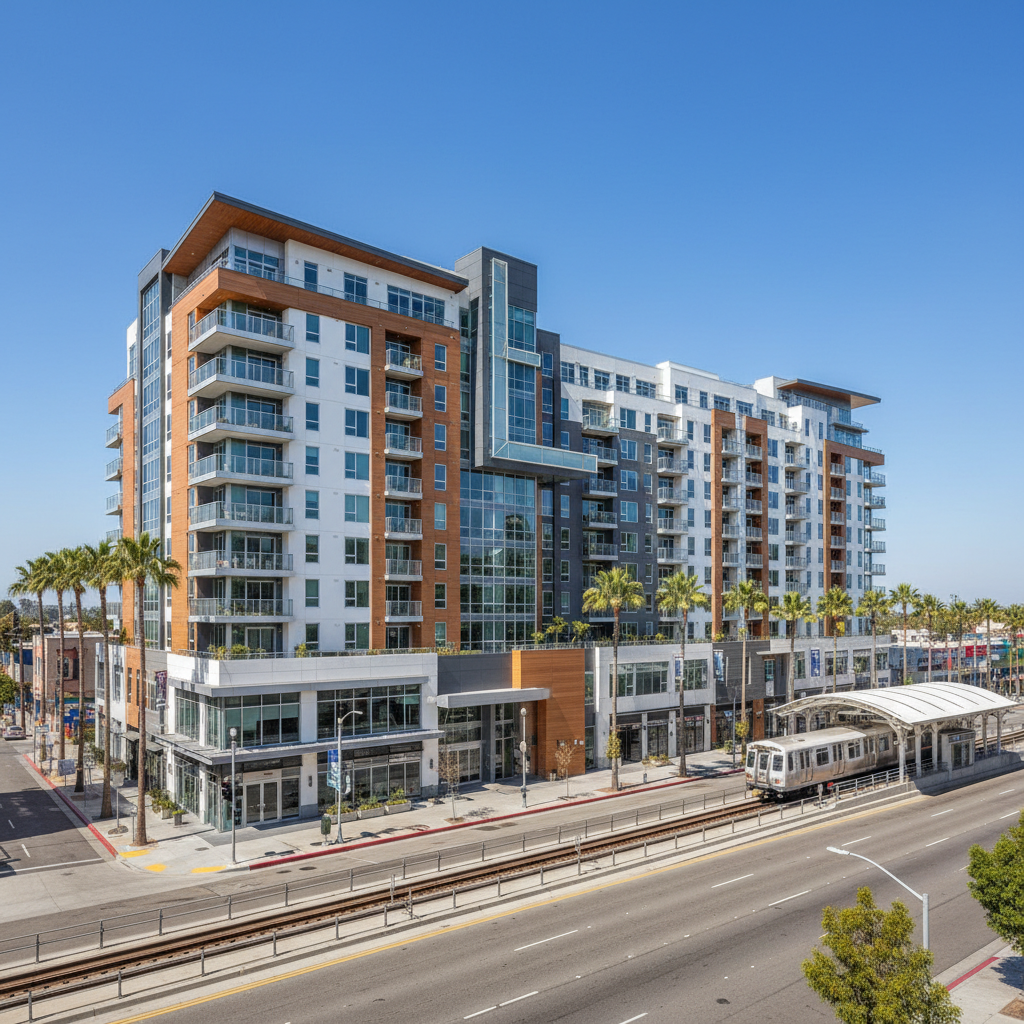
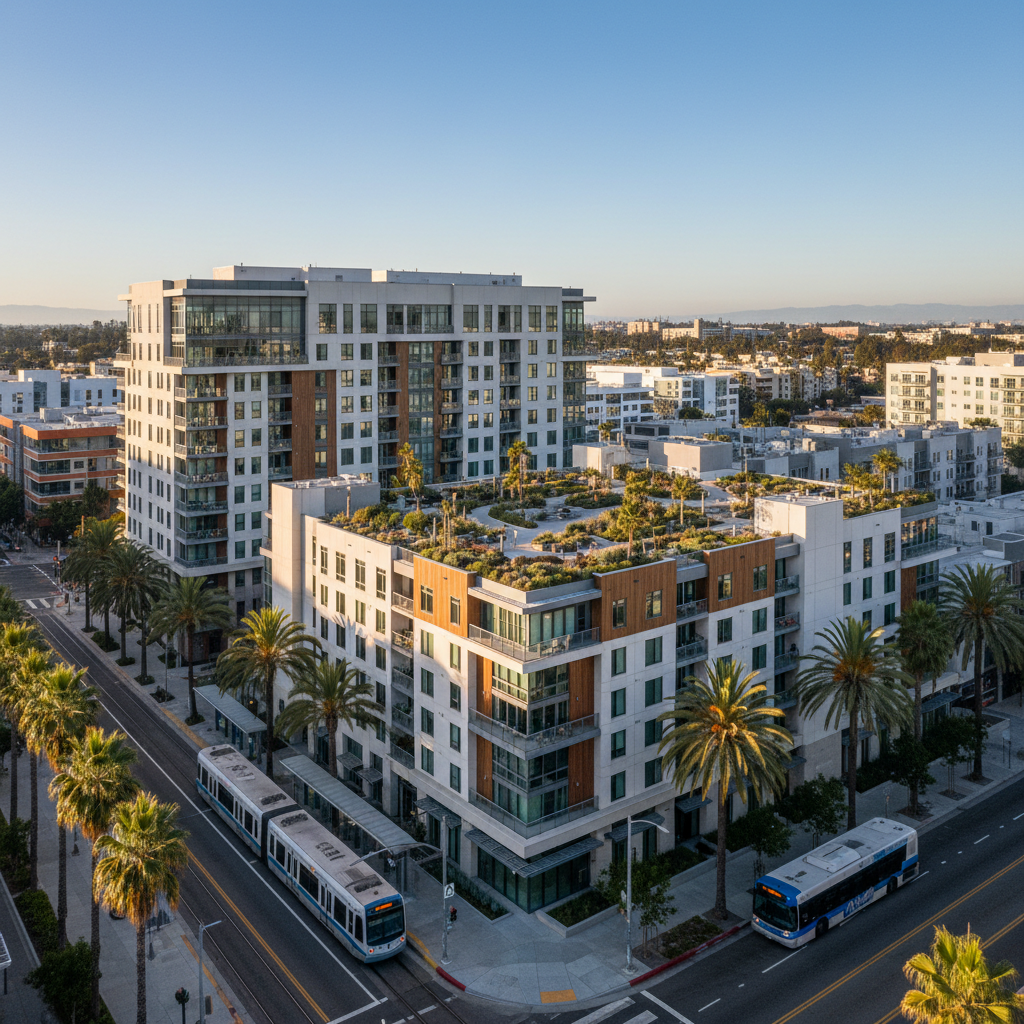
The most significant catalyst for the upcoming property value explosion is **Senate Bill 79 (SB 79)**. This landmark legislation, which takes full effect on July 1, 2026, effectively mandates transit-oriented rezoning across the state. It allows developers to build mid-rise apartments—up to nine stories in some cases—near major transit hubs, subways, and dedicated bus lines.
The 'Wiggle Room' Strategy
As reported by CalMatters, cities across California are currently in a state of 'scramble.' Local governments are looking for 'wiggle room' to maintain control over their local aesthetics and density. For example, Los Angeles recently voted to overhaul portions of its zoning map to delay SB 79 implementation by taking advantage of escape clauses for areas that already meet a 50% housing threshold. However, this delay is temporary. For property owners, this 'wiggle' period is a gift. It provides a window to acquire or reposition land that is currently valued as low-density residential or light commercial but will soon be legally eligible for high-density mid-rise development.
Identifying the Transit-Adjacent Winners
The real 'Gold Rush' isn’t happening in the suburbs of the Inland Empire, but rather in the 'Transit-Oriented Districts' (TODs) of cities like Long Beach, Santa Monica, and Pasadena. If your property is within a half-mile of a Metro rail station or a high-frequency bus corridor, its literal 'zoning floor' has just been raised. Institutional investors aren't just buying buildings; they are buying the *rights* to future density. As a private owner, you should be auditing your portfolio against the new SB 79 maps to see if your three-unit walk-up just became a potential 20-unit development site.
3. The Camden Signal: Understanding Portfolio Rebalancing
Much has been made of Camden Property Trust marketing its
.5 billion California portfolio. To the untrained eye, this looks like a flight from the state's regulatory environment. In reality, it is a classic 'Portfolio Rebalancing' move. Camden’s CEO, Ric Campo, has noted that their strategy is to concentrate on the Sun Belt where they already have massive operational scale.The Vacuum for Local Investors
When a REIT like Camden exits, they aren't selling because the buildings are bad; they are selling because their corporate mandate requires different geographic concentrations. This creates a high-value vacuum. When
.5 billion worth of prime assets hits the market, it creates a temporary ceiling on prices for other buildings in the area. This is the moment for local Southern California syndicates and private high-net-worth individuals to step in. You aren't competing with Camden; you are buying the assets that no longer fit their specific corporate box, but remain 'trophy' locations in the SoCal landscape.Institutional Logic for the Private Owner
The 'Camden Signal' tells us that the demand for these properties is still insatiable. There are hundreds of bidders for these portfolios. If the smartest money in the world is still bidding on
.5 billion worth of California real estate, the narrative that 'landlords are fleeing' is factually incorrect. They are simply changing hands. As a property owner in Riverside or Los Angeles, this should give you immense confidence in the underlying liquidity of your asset.4. Supply Constraints vs. Legislated Growth: The 'Coiled Spring' Effect
Why do we call 2027 and 2028 the 'Coiled Spring'? Because the confluence of falling interest rates (projected) and the total lack of new construction starts in 2024-2025 will create a supply cliff. At the same time, lifestyle shifts and the continued strength of the Southern California economy (especially in tech and aerospace in the South Bay and El Segundo) ensure demand remains high.
Legislated Growth: The Floor of the Market
California’s regulatory environment, while often criticized for its complexity, actually creates a 'moat' for existing property owners. Laws like SB 79 and the ongoing Housing Element updates legally mandate growth but make it difficult for new competitors to enter the market quickly. This 'legislated growth' ensures that once the current supply is absorbed, there is no 'second wave' of housing coming to save the market from price increases. Property owners who hold through the 2026 'silence' will be the beneficiaries of the 2027-2028 rent spikes.
The Resilience of the Inland Empire
While coastal regions like Orange County are more insulated, the Inland Empire (Riverside and San Bernardino) is seeing its own version of this spring. As the logistics hub of the Western US, the job growth here is foundational. Even if rents 'breathe out' for six months, the population influx from the coast to the more affordable IE continues. This internal migration acts as a stabilizer, preventing the kind of total market collapse seen in other parts of the country.
5. The Resilience Blueprint: How to Think Like an Institution
Private owners do not need
.5 billion to utilize institutional logic. To weather the cooling 2026 rents and position for the 2027 density boom, you should implement the following 'Resilience Blueprint':- Prioritize Retention over Rent Growth: In a year where 'rents breathe out,' your biggest expense is turnover. Institutional managers are currently offering modest renewal incentives (like a free week of rent or a small upgrade) to keep occupancy at 96% rather than pushing for a 5% increase that leads to a 60-day vacancy.
- Audit Your SB 79 Potential: Contact a land-use consultant or your property management team at McIntire Kingstone to see if your property falls under the new transit-oriented rezoning. If it does, your property's value is no longer tied strictly to its current rent roll, but to its 'residual land value.'
- Navigate the New Eviction Protections: As of April 2026, Los Angeles County has implemented enhanced eviction protections for unincorporated areas. Institutional logic dictates strict compliance and impeccable record-keeping. Ensure your property management team is up-to-date on the latest 'Just Cause' requirements to avoid costly legal setbacks that can derail your 2027 exit strategy.
- Focus on 'Soft Amenities': When you can't compete on price, compete on experience. Improved security, high-speed fiber internet, and better-managed common areas (even in smaller 5-10 unit buildings) allow you to command a premium over the unmanaged or poorly managed 'mom and pop' buildings next door.
Conclusion: Positioning for the Upswing
The 'Institutional Echo' is a reminder that in real estate, the best time to look for opportunity is when the majority of the market is focused on the immediate, minor decline. The
.5 billion moving into Southern California today isn't looking at May 2026; it's looking at May 2030. By understanding the transit-oriented boom catalyzed by SB 79 and recognizing the structural supply constraints that make 2027 a 'coiled spring,' local investors can move with the same confidence as the world's largest REITs.At McIntire Kingstone, we help our clients implement this institutional logic every day, ensuring their Southern California assets are not just managed, but strategically positioned for the next era of growth. Don't let the 'silence between the rent breaths' worry you—it's merely the market taking a breath before the next big run.
MK Property Management
The McIntire Kingstone team brings decades of combined experience in property management, real estate investment, and tenant relations.
Related Articles
In the spring of 2026, the Southern California rental market presents a curious contradiction. To the casual observer scanning headlines in the Los Angeles Times or the Orange County Register, the narrative seems clear: rents are softening, vacancies are ticking upward in places like the Inland Empire, and the post-pandemic housing frenzy has finally met its cooling point. However, beneath this surface-level 'stagnation' lies a massive,
At McIntire Kingstone, we monitor these shifts across Los Angeles, Riverside, and San Diego daily. We are currently witnessing a phenomenon we call 'The Institutional Echo.' It is the sound of major firms like Camden Property Trust and other institutional giants rebalancing their portfolios—not because they lack faith in California, but because they are preparing for a massive legislative and economic shift that will redefine property values by the end of the decade. For the private investor in Southern California, understanding this 'silence between the rent breaths' is the key to transitioning from a defensive posture to an offensive, wealth-building strategy.
1. Analyzing the '2027 Horizon': Why Stagnation is a 'Buy the Dip' Window
The current 2026 data shows rent growth hovering near zero, and in some submarkets of San Bernardino and Riverside, we’ve even seen slight retreats. To a short-term thinker, this looks like a decline. To institutional logic, this is a 'coiled spring.' The 2027 Horizon represents the point where the current glut of supply—largely the result of projects greenlit during the 2021-2022 boom—is fully absorbed, and the structural deficit of California housing returns with a vengeance.
The Supply-Demand Mismatch
Institutional investors are betting on the fact that California remains one of the most supply-constrained markets in the world. While 2025 and 2026 saw a modest increase in delivered units, the pipeline for 2027 and 2028 has slowed significantly due to high interest rates over the past 24 months. When the current inventory is absorbed, there will be a vacuum of new product. Investors moving
Yield Compression vs. Long-Term Appreciation
While cash flow might be squeezed in the immediate term, institutional players prioritize total return. In Southern California, the appreciation potential of a stabilized multifamily asset often outweighs the temporary loss in monthly NOI (Net Operating Income). For a private owner in Orange County or San Diego, following this institutional lead means resisting the urge to sell during a flat cycle and instead focusing on asset preservation and minor capital improvements that will pay dividends when the market re-accelerates in 2027.
2. Strategic Wiggling: How SB 79’s Rezoning is Creating a 'Property Value Gold Rush'
The most significant catalyst for the upcoming property value explosion is **Senate Bill 79 (SB 79)**. This landmark legislation, which takes full effect on July 1, 2026, effectively mandates transit-oriented rezoning across the state. It allows developers to build mid-rise apartments—up to nine stories in some cases—near major transit hubs, subways, and dedicated bus lines.
The 'Wiggle Room' Strategy
As reported by CalMatters, cities across California are currently in a state of 'scramble.' Local governments are looking for 'wiggle room' to maintain control over their local aesthetics and density. For example, Los Angeles recently voted to overhaul portions of its zoning map to delay SB 79 implementation by taking advantage of escape clauses for areas that already meet a 50% housing threshold. However, this delay is temporary. For property owners, this 'wiggle' period is a gift. It provides a window to acquire or reposition land that is currently valued as low-density residential or light commercial but will soon be legally eligible for high-density mid-rise development.
Identifying the Transit-Adjacent Winners
The real 'Gold Rush' isn’t happening in the suburbs of the Inland Empire, but rather in the 'Transit-Oriented Districts' (TODs) of cities like Long Beach, Santa Monica, and Pasadena. If your property is within a half-mile of a Metro rail station or a high-frequency bus corridor, its literal 'zoning floor' has just been raised. Institutional investors aren't just buying buildings; they are buying the *rights* to future density. As a private owner, you should be auditing your portfolio against the new SB 79 maps to see if your three-unit walk-up just became a potential 20-unit development site.
3. The Camden Signal: Understanding Portfolio Rebalancing
Much has been made of Camden Property Trust marketing its
The Vacuum for Local Investors
When a REIT like Camden exits, they aren't selling because the buildings are bad; they are selling because their corporate mandate requires different geographic concentrations. This creates a high-value vacuum. When
Institutional Logic for the Private Owner
The 'Camden Signal' tells us that the demand for these properties is still insatiable. There are hundreds of bidders for these portfolios. If the smartest money in the world is still bidding on
4. Supply Constraints vs. Legislated Growth: The 'Coiled Spring' Effect
Why do we call 2027 and 2028 the 'Coiled Spring'? Because the confluence of falling interest rates (projected) and the total lack of new construction starts in 2024-2025 will create a supply cliff. At the same time, lifestyle shifts and the continued strength of the Southern California economy (especially in tech and aerospace in the South Bay and El Segundo) ensure demand remains high.
Legislated Growth: The Floor of the Market
California’s regulatory environment, while often criticized for its complexity, actually creates a 'moat' for existing property owners. Laws like SB 79 and the ongoing Housing Element updates legally mandate growth but make it difficult for new competitors to enter the market quickly. This 'legislated growth' ensures that once the current supply is absorbed, there is no 'second wave' of housing coming to save the market from price increases. Property owners who hold through the 2026 'silence' will be the beneficiaries of the 2027-2028 rent spikes.
The Resilience of the Inland Empire
While coastal regions like Orange County are more insulated, the Inland Empire (Riverside and San Bernardino) is seeing its own version of this spring. As the logistics hub of the Western US, the job growth here is foundational. Even if rents 'breathe out' for six months, the population influx from the coast to the more affordable IE continues. This internal migration acts as a stabilizer, preventing the kind of total market collapse seen in other parts of the country.
5. The Resilience Blueprint: How to Think Like an Institution
Private owners do not need
- Prioritize Retention over Rent Growth: In a year where 'rents breathe out,' your biggest expense is turnover. Institutional managers are currently offering modest renewal incentives (like a free week of rent or a small upgrade) to keep occupancy at 96% rather than pushing for a 5% increase that leads to a 60-day vacancy.
- Audit Your SB 79 Potential: Contact a land-use consultant or your property management team at McIntire Kingstone to see if your property falls under the new transit-oriented rezoning. If it does, your property's value is no longer tied strictly to its current rent roll, but to its 'residual land value.'
- Navigate the New Eviction Protections: As of April 2026, Los Angeles County has implemented enhanced eviction protections for unincorporated areas. Institutional logic dictates strict compliance and impeccable record-keeping. Ensure your property management team is up-to-date on the latest 'Just Cause' requirements to avoid costly legal setbacks that can derail your 2027 exit strategy.
- Focus on 'Soft Amenities': When you can't compete on price, compete on experience. Improved security, high-speed fiber internet, and better-managed common areas (even in smaller 5-10 unit buildings) allow you to command a premium over the unmanaged or poorly managed 'mom and pop' buildings next door.
Conclusion: Positioning for the Upswing
The 'Institutional Echo' is a reminder that in real estate, the best time to look for opportunity is when the majority of the market is focused on the immediate, minor decline. The
At McIntire Kingstone, we help our clients implement this institutional logic every day, ensuring their Southern California assets are not just managed, but strategically positioned for the next era of growth. Don't let the 'silence between the rent breaths' worry you—it's merely the market taking a breath before the next big run.
MK Property Management
The McIntire Kingstone team brings decades of combined experience in property management, real estate investment, and tenant relations.