Decoding the 'Wiggle Room': SB 79 and Southern California’s Compliance Tactic
As we approach July 1, 2026, a seismic shift in California real estate law is moving from the legislative floor to the pavement of Southern California. Senate Bill 79 (SB 79), the landmark housing overhaul signed into law last fall, is designed to densify neighborhoods surrounding major transit hubs. However, the legislation contains what many are now calling the 'Wiggle Room'—a series of escape clauses and deferment opportunities that local governments from Los Angeles to San Diego are aggressively exploiting.
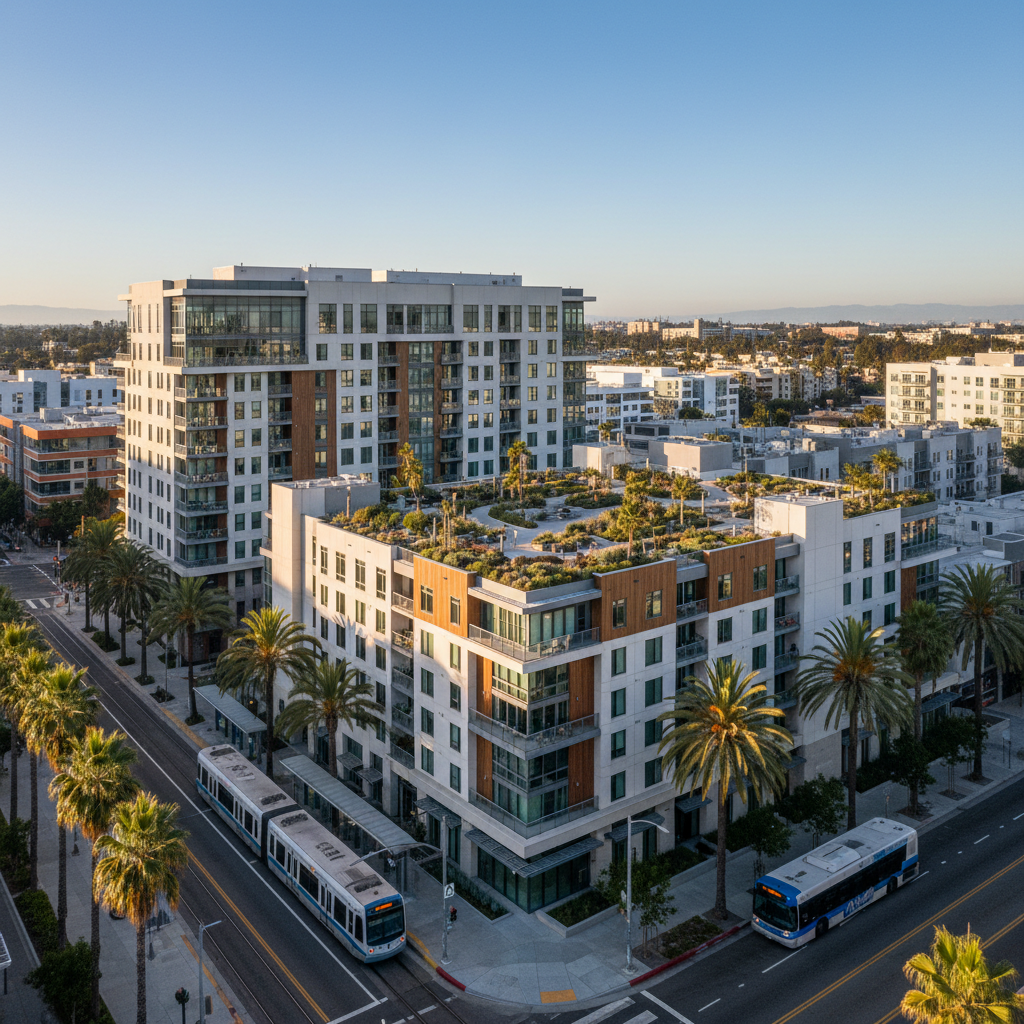
For property owners and investors in the Inland Empire, Orange County, and the Los Angeles basin, understanding this 'wiggle' is not just about urban planning; it is about asset preservation and capital positioning. The law essentially mandates that certain neighborhoods near subway stations, light rail hubs, and high-frequency bus corridors must be rezoned to allow for mid-rise residential developments, some reaching nine stories in height. But as the deadline nears, many cities are fighting to maintain local control over their skylines.
In Los Angeles, the City Council recently voted to overhaul portions of the local zoning map specifically to buy more time. By leveraging a clause that exempts transit-adjacent areas already meeting at least 50% of the state’s housing targets, the city has successfully pushed back the full implementation of SB 79 for several years in specific districts. This 'planning limbo' creates a complex environment for property owners. At McIntire Kingstone, we are advising our clients that while the city might be 'wiggling,' the market remains in motion. Doing nothing while the legal dust settles is a strategy fraught with risk.
The July 1st Operational Audit: A Roadmap for Transit-Adjacent Owners
If you own property within a half-mile of a Metro rail station in North Hollywood, a Metrolink stop in Riverside, or a dedicated bus Rapid Transit (BRT) lane in Orange County, your July 1st checklist must be ready now. The difference between a 'planned' management strategy and a 'legislated' one often comes down to the quality of your data.
Step 1: Verify Transit Hub Proximity
SB 79 defines 'major transit stops' with specific criteria. Property owners should verify if their assets fall within a 'High-Quality Transit Area' (HQTA). This includes distance to rail, subway, and bus lines with service intervals of 15 minutes or less during peak hours. In the Inland Empire, where Metrolink expansion is frequent, a property that wasn't 'transit-adjacent' last year might be today.
Step 2: Compare Current Zoning vs. Mandated Density
Conduct a gap analysis. If your current zoning allows for a maximum of three stories, but SB 79 mandates a density floor of five to nine stories for your specific street, your land value has effectively changed overnight. However, if your city—like many in Southern California—has filed for a 'Local Control Extension,' you may be operating under old rules with a sunset clause. Knowing exactly where your property sits on this timeline is critical for 2027-2030 financial forecasting.
Step 3: Review Title and Deed Restrictions
State law often overrides local zoning, but specific deed restrictions or historical preservation overlays can still pose hurdles. During your audit, ensure that your property title doesn't contain legacy clauses that might conflict with the new mid-rise density rights granted under state law. This is particularly relevant in older neighborhoods of Pasadena, Long Beach, and Santa Ana.
Vendor Readiness for the Mid-Rise Shift: Preparing for Density
The jump from managing a two-story garden-style apartment complex to a nine-story mid-rise is not just a change in scale; it is a change in operational complexity. For owners in regions like the Inland Empire or San Bernardino, where horizontal development has been the norm, the shift to verticality requires a new breed of vendor readiness.
Elevator Systems and Vertical Logistics: Most 'legacy' multifamily assets in Southern California are walk-ups or have limited elevator capacity. A nine-story density shift means your maintenance teams and vendor network must include certified elevator technicians and specialized fire safety inspectors. At McIntire Kingstone, we are already vetting vendors who can handle the increased mechanical load of high-density infrastructure.
Capital Improvement Cycles: If you are planning a roof replacement or a HVAC overhaul in 2026, you must ask: Should I build for today, or for the potential nine-story redevelopment of tomorrow? Investing $500,000 in a structure that might be razed for a transit-oriented mid-rise in five years may not be the best use of capital. Conversely, failing to maintain current standards while waiting for a developer's offer can lead to 'demolition by neglect' penalties.
Infrastructure Stress Tests: High-density developments place massive stress on local water, sewage, and power grids. Property owners should engage civil engineers to assess whether the existing street-level infrastructure can even support the SB 79 mandates. Often, the city’s 'wiggle room' is predicated on the fact that the sewer lines can't handle a 100-unit building where a 10-unit building currently sits.
Managing the 'Planning Limbo': Communication is Key
Perhaps the most difficult part of SB 79 is the communication gap between property owners, city councils, and potential developers. Many owners find themselves in a state of paralysis—city councils are delaying rezoning to 'protect neighborhood character,' while developers are knocking on doors with low-ball offers based on 'uncertain' regulatory futures.
Landlord-Tenant Transparency
As discussions about rezoning and density become public, tenants may become anxious about potential displacement or long-term construction. It is vital to maintain clear, professional communication with your residents. Explain that while state law is changing, any physical changes to the property are years away and will follow all California relocation assistance laws. Keeping your vacancy rates low during this 'limbo' period requires maintaining tenant trust.
Dealing with the '2027 Horizon' Developers
As noted in recent market trends, institutional capital is moving into Southern California to capture value before the 2027 market rebound. You will likely receive unsolicited offers for your transit-adjacent property. A 'legislated' mindset says you must sell now because the rules are too complex. A 'planned' management mindset assesses the long-term NOI (Net Operating Income) of a potentially larger building. Do not commit to a sale without a master-plan analysis that accounts for the full density bonus potential of SB 79.
The Compliance Safety Net: Why Selective Inaction is a Risk
The temptation for many Southern California landlords—especially those in slower-moving markets like Riverside or parts of the San Gabriel Valley—is to ignore SB 79 until the local building department forces the issue. This is a mistake. Doing nothing before July 1st is an operational risk that could lead to 'legislated' rather than 'planned' management.
- Loss of Direct Control: If a city fails to create a compliant plan by the state-mandated deadline and doesn't qualify for an escape clause, the 'Builder’s Remedy' or equivalent state mandates may take over. This means a developer could propose a project that ignores local aesthetic guidelines entirely, potentially devaluing neighboring assets you may also own.
- Compliance Fines and Legal Exposure: California is increasingly aggressive about enforcing housing elements. Local jurisdictions that 'wiggle' too much may face lawsuits from the state, leading to a freeze on all building permits—even for minor repairs or ADA upgrades on your properties.
- Missed Incentives: Early adopters of SB 79-compliant plans often qualify for state-level grants or tax credits for transit-oriented development. By waiting for the 'wiggle' to end, you may miss out on the financial cushions that make high-density construction viable.
In conclusion, July 1, 2026, is not just a date on a calendar; it is the beginning of a new era for Southern California real estate. Whether you are managing a portfolio in Orange County or a single multi-unit in San Diego, the SB 79 mandate is coming. By designing your compliance buffer now—auditing your assets, preparing your vendors, and staying informed on local 'wiggle' tactics—you ensure that your property management remains proactive rather than reactive.
At McIntire Kingstone, we specialize in navigating these complex regulatory waters. We understand the nuances of Southern California's local city councils and the broad reach of Sacramento’s housing mandates. Don't let the 'wiggle room' leave you in the lurch. Contact us today to review your transit-oriented asset strategy and ensure your portfolio is ready for the 2027 horizon.
 .5B Bets on the SoCal Rent Silence" class="w-full h-40 object-cover transition-transform duration-300 group-hover:scale-105" loading="lazy"/>