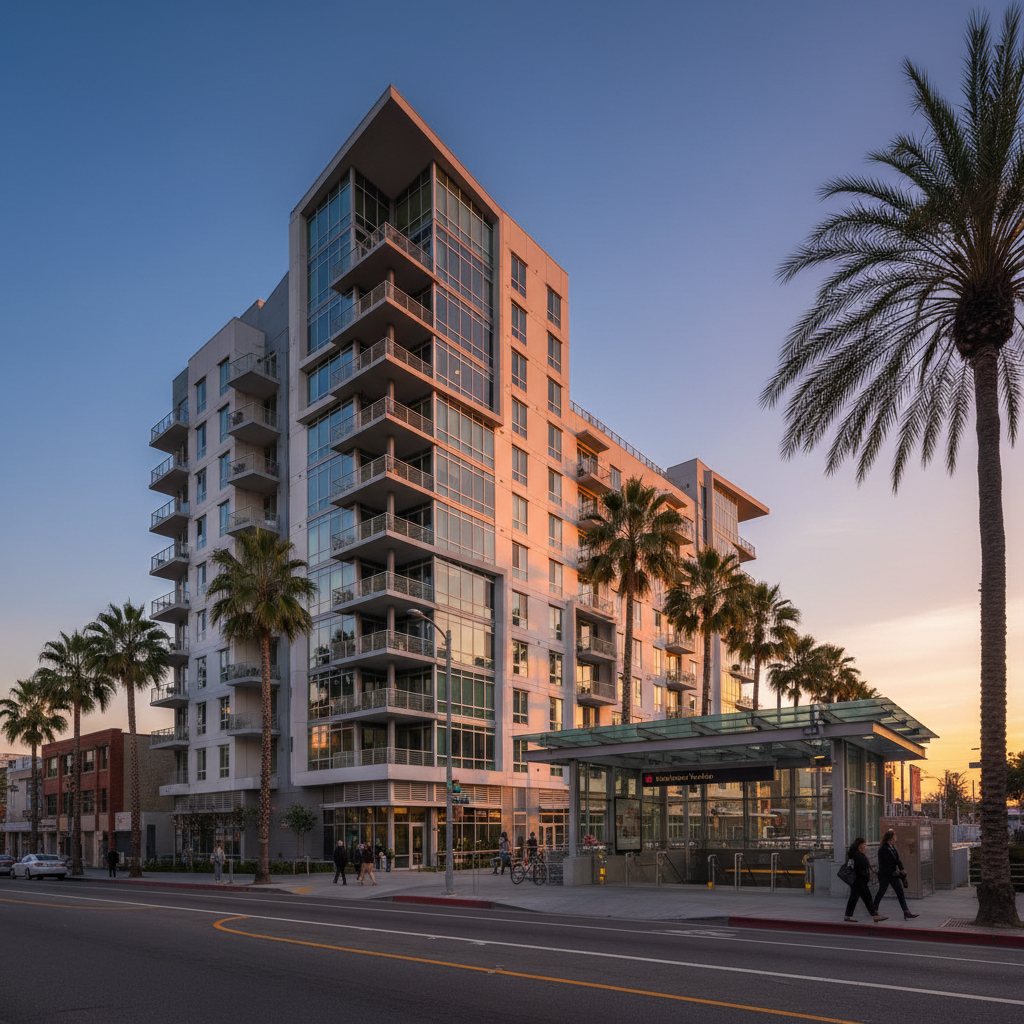
The Great Transit Land Transition: Analyzing the 3,000-Parcel Shift
California is historically known for its sprawling car culture, but a seismic shift is underway that will redefine the Southern California real estate landscape. As of March 2026, a groundbreaking study by Enterprise Community Partners has identified nearly 3,000 parcels of land owned by transit agencies that are ripe for residential development. This isn't just a minor policy update; it is the birth of 'instant' sub-markets within some of the most established neighborhoods in Los Angeles, Orange County, and San Diego.
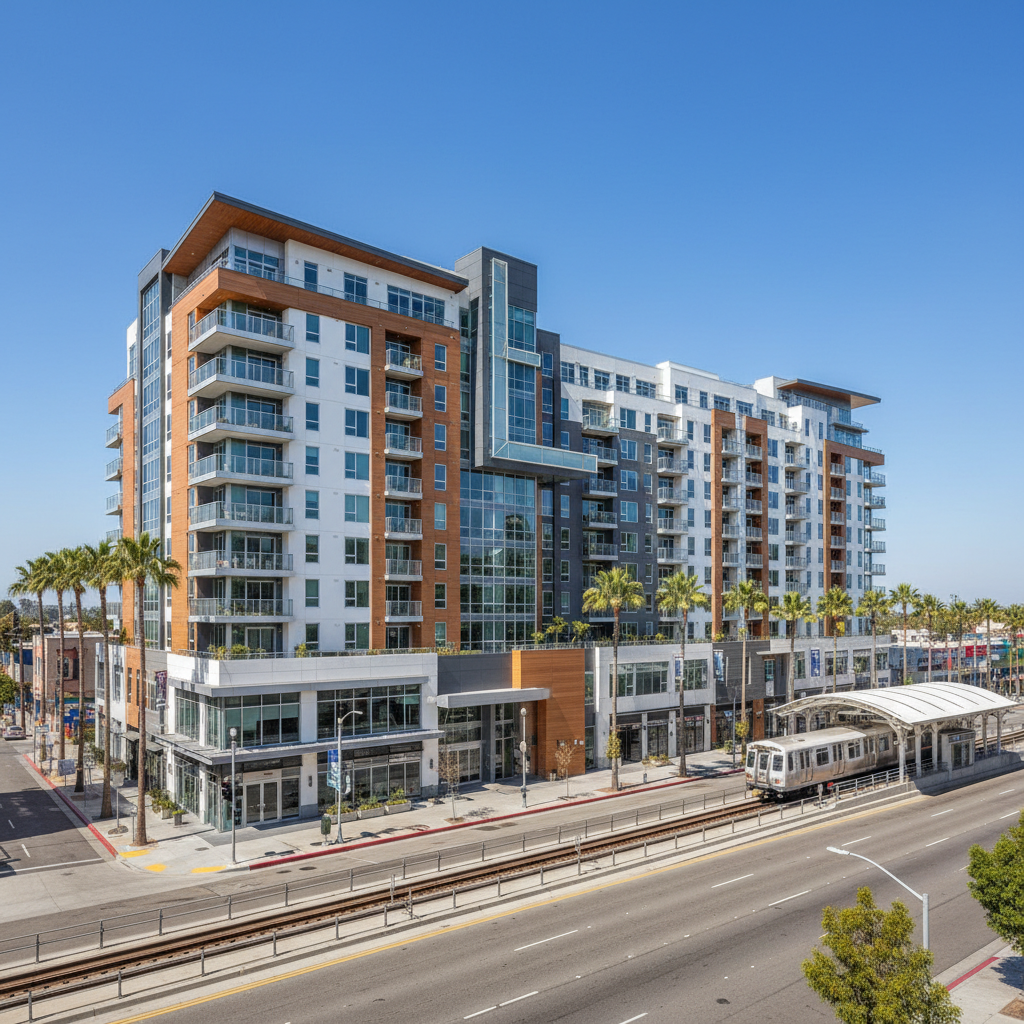
For decades, these parcels—often used as surface parking lots, maintenance yards, or staging areas—have sat underutilized. Now, thanks to state-level mandates and a desperate need for housing, these sites are being fast-tracked for conversion into high-density residential hubs. For the private property owner in Southern California, this transit-owned land rush represents both a challenge and a massive opportunity. When a transit agency like LA Metro or the San Diego Metropolitan Transit System (MTS) decides to develop a 500-unit complex on a former parking lot, the surrounding half-mile radius undergoes an immediate transformation in demographic demand and commercial viability.
Creating Instant Sub-Markets
Unlike traditional ground-up development where a single developer might battle NIMBYism for a decade, transit-owned land often benefits from streamlined EIR (Environmental Impact Report) processes and state-level overrides of local zoning. This creates what we call 'instant' sub-markets. In regions like the Inland Empire or the San Gabriel Valley, a single station development can bring 1,000+ new residents to a block that previously had zero residential density. This influx of foot traffic creates a 'halo effect' for existing property owners, driving up the value of nearby smaller multi-family assets and retail spaces.
The 2026 Transit-Oriented Density (TOD) Windfall in SoCal
As we move through 2026, specific corridors in Southern California are slated for rapid inventory injections. This 'TOD windfall' is concentrated in areas where the infrastructure is already moving people, but the housing hasn't caught up. Understanding where these injections are happening is critical for investors looking to position their portfolios ahead of the curve.
Los Angeles Metro: The Heavyweight of TOD
In Los Angeles, the focus remains on the 'Purple (D Line) Extension' and the 'Sepulveda Transit Corridor.' However, the real movement is happening on existing lines where underutilized lots are being converted. Areas around the E Line (Expo) and the A Line (Blue) through Long Beach are seeing massive permit activity. State laws now allow for significant density bonuses for any project within a half-mile of these major transit stops, essentially turning every bungalow within ten blocks of a Metro station into a potential high-density redevelopment site.
San Diego MTS and the 'Skyline' Shift
San Diego’s MTS has been aggressive in its 'Transit-Oriented Development Program.' We are seeing clusters of development along the Mid-Coast Trolley extension and in the South Bay. For San Diego property owners, this means the traditional 'suburban' feel of neighborhoods like Clairemont or Linda Vista is transitioning into a more urbanized, New York-style density. Investors who own older 'missing middle' housing (4-plexes to 10-plexes) in these areas should expect a surge in land value as developers look to assemble parcels near these transit-anchored giants.
Regional Rail and the Inland Empire Connection
Don't overlook the Metrolink corridors in Riverside and San Bernardino. As the 'New York approach' to high-density housing reaches the Inland Empire, we are seeing transit agencies look at stations in Rancho Cucamonga and Riverside as anchors for massive mixed-use communities. This is part of the state’s effort to reduce Vehicle Miles Traveled (VMT) by forcing housing closer to rail lines, effectively attempting to curb the inland sprawl that has defined the region for 50 years.
Competitive Positioning for Private Property Owners
With 240,000 potential transit-adjacent units on the horizon, boutique and mid-sized property owners in Southern California might feel intimidated. How does a 20-unit vintage apartment building in North Hollywood or Little Italy compete with a brand-new, 400-unit TOD mega-complex next door? The key lies in differentiation and agility.
The Boutique Advantage: Character and Community
While the new transit-owned developments offer amenities like rooftop pools and modern gyms, they often lack the 'soul' and character that many Southern California renters crave. Smaller owners can differentiate by doubling down on 'California Living' aesthetics—landscaped courtyards, private outdoor spaces, and unique architectural details. Many Gen Z and Millennial renters prefer the intimacy of a 10-unit building over the 'dormitory' feel of a massive high-rise, provided the smaller building offers modern essentials like high-speed internet and updated kitchens.
Agile Property Management
Larger institutions are often bogged down by corporate bureaucracy. As a private owner, you can pivot faster. At McIntire Kingstone, we advise our clients to look at these massive new developments not as competitors, but as 'anchor tenants' for the neighborhood. They bring the high-end coffee shops, the grocery stores, and the improved lighting/security that boost your property's value. Your goal should be to position your asset as the higher-value, more 'authentic' alternative to the corporate high-rise.
- Upgrade Tech: Ensure your older assets have smart locks and mesh Wi-Fi to match the tech expectations of transit-oriented renters.
- Pet-Friendly Policies: Large TODs often have restrictive pet breeds or high fees. Being a 'pet-loving' boutique owner can capture a target demographic.
- Lease Flexibility: Offer 6-month or 18-month options that rigid corporate structures won't touch.
The 'Last Mile' Advantage: Valuation Divergence
One of the most profound impacts of the 2026 transit rush is the widening gap in valuations between transit-adjacent properties and car-dependent suburban layouts. We are witnessing a divergence where the 'Last Mile'—the distance between a transit hub and a home—becomes the primary driver of Cap Rates in Southern California.
Walking vs. Driving: The New Metric
Historically, a 'quiet' neighborhood away from the main road was a premium. Today, in cities like Santa Monica, Culver City, and Pasadena, properties within a 10-minute walk (roughly 0.5 miles) of a light rail station are commanding a 15-25% premium in rent and valuation over properties that require a car for all errands. This is fueled by the state’s VMT (Vehicle Miles Traveled) regulations, which make it increasingly expensive and difficult to build in car-dependent areas.
Future-Proofing Your Investment
If you are looking to acquire or exchange (1031) into new assets, the transit-adjacent 'walk score' should be your north star. Even in the Inland Empire, where the car is still king, the long-term play is shifting toward nodes of density. Properties that provide easy access to transit hubs are essentially being 'pre-approved' for future demand by state policy. Conversely, traditional suburban layouts that lack transit access may face stagnating growth as state fees on 'sprawl' construction continue to rise.
Legislative Side-Effects: The 'New York Approach'
California’s legislative shift toward a 'New York State of Mind'—as critics often call it—aims to force high-density living by making it harder to build anything else. This has several side-effects that every Southern California landlord must understand to remain compliant and profitable.
Rent Ceilings and Affordable Housing Requirements
Many of these 240,000 new units on transit-owned land will come with 'Inclusionary Housing' mandates. This means a percentage of the units must be affordable. While this increases total supply, it often doesn't lower the 'market rate' for existing private owners as much as one might expect. In fact, these mandates can create a two-tiered market. Professional property management is essential here to track how local 'Tenant Protection Acts' (like AB 1482) interact with these new high-density zones.
Demographic Shifts
The move toward TOD units is attracting a more transient, professional demographic. These are 'renters by choice' who value time and proximity over square footage. For property owners, this means higher turnover but also higher credit-quality tenants. You are no longer just competing with the landlord next door; you are competing with the lifestyle of the 'urban nomad.' Understanding the local ordinances in cities like West Hollywood or Long Beach regarding short-term rentals and 'co-living' setups is vital, as these laws often change to accommodate the density of transit hubs.
The Impact of SB 9 and SB 10
We cannot discuss the transit land rush without mentioning Senate Bills 9 and 10. These laws allow for increased density on single-family lots, particularly those near transit. If you own a single-family home (SFH) or a duplex within these corridors, your property represents a 'mini-TOD' opportunity. Converting an oversized backyard into an ADU (Accessory Dwelling Unit) or splitting a lot is now backed by state law, allowing you to ride the wave of density that transit agencies are leading.
Actionable Steps for Southern California Landlords
To capitalize on the 240,000 key-turns coming to California’s transit corridors, owners should take the following steps today:
- Map Your Portfolio: Audit your current holdings against the LA Metro, MTS, and Metrolink expansion maps. If you are within 0.5 miles of a station, you are sitting on a transit goldmine.
- Assess Development Potential: Don't wait for a developer to knock. Consult with a property management firm about the highest and best use of your lot under current TOD density bonus laws.
- Enhance 'Walkability' Features: If your property is near a hub, focus your capital improvements on things that matter to transit users: secure bike storage, package lockers for commuter deliveries, and improved outdoor lighting.
- Monitor VMT Fees: Be aware that building in outlying areas of Riverside or San Bernardino will become significantly more expensive due to VMT fees. Focus your future acquisitions on infill locations.
- Leverage Professional Management: As these 'instant' sub-markets emerge, the competition for tenants will stiffen. Having a management team that understands the nuances of the SoCal market—from legal compliance to hyper-local marketing—is the difference between a high-vacancy building and a thriving asset.
Conclusion
The transition of 3,000 transit-owned parcels into 240,000 homes is not just a government project; it is the blueprint for the future of Southern California real estate. While state regulators push for a 'New York' density model, the private property owner remains the backbone of the market. By understanding the corridors of growth and positioning your assets to benefit from the 'Last Mile' advantage, you can turn this transit land rush into a long-term windfall for your portfolio. At McIntire Kingstone, we are here to help you navigate these shifting tracks, ensuring your property is always the next stop for quality tenants.
 .5B Bets on the SoCal Rent Silence" class="w-full h-40 object-cover transition-transform duration-300 group-hover:scale-105" loading="lazy"/>