The Great Rental Pivot of 2026: Why Long-Term Leases are Giving Way to Executive Micro-Stays
For decades, the bedrock of a successful real estate investment in Southern California was the standard 12-month lease. Landlords sought stability, minimal turnover, and predictable cash flow. However, as we move through March 2026, the landscape of the SoCal rental market is undergoing a seismic shift. We are witnessing the emergence of the "Corporate Chameleon"—a property owner who adapts their portfolio to mimic the needs of a new, highly mobile, and high-budget class of professional: the business traveler seeking "executive micro-stays."
In regions like Los Angeles, Orange County, and the Inland Empire, the traditional rental model is facing pressure from shifting economic winds. Investors who fail to adapt risk stagnant yields, while those who pivot toward a "home-away-from-home" model are seeing unprecedented returns. At McIntire Kingstone, we are helping our clients navigate this transition by blending professional property management with hospitality-level service standards. This article explores the data driving this change and provides a blueprint for building a resilient, high-yield portfolio in the modern era.
1. Analyzing the Dwellsy 2026 Index: The Case for Niche Resilience
To understand why the shift toward corporate housing is accelerating, we must look at the macro data provided by the Dwellsy IQ 2026 Rental Housing Index. The report highlights a fascinating divergence in the market: while multi-family apartment rents are beginning to soften due to an influx of new supply, detached single-family houses and niche-market units remain remarkably resilient.
The Supply-Demand Mismatch in Southern California
In many parts of Southern California, particularly in suburban pockets of Riverside and San Bernardino, the surge in large-scale apartment developments has led to increased competition among landlords. When supply exceeds traditional renter demand, price stagnation is inevitable. However, the Dwellsy data suggests that professional-grade units—those that offer more privacy, higher-end finishes, and flexible terms—are not just holding steady; they are thriving.
Why Executive Units Outperform
Corporate micro-stays typically occupy the space between a luxury hotel and a standard rental. These units remain resilient because they cater to a specific, well-funded demographic: consultants, tech implementation teams, and traveling medical professionals who have higher budgets than the average local renter but prefer the comforts of a residence over a sterile hotel room. By targeting this niche, property owners in areas like the Inland Empire can bypass the price wars occurring in the standard multi-family sector.
2. The 'NoHo Blueprint': Leveraging Arts and Tech Hubs
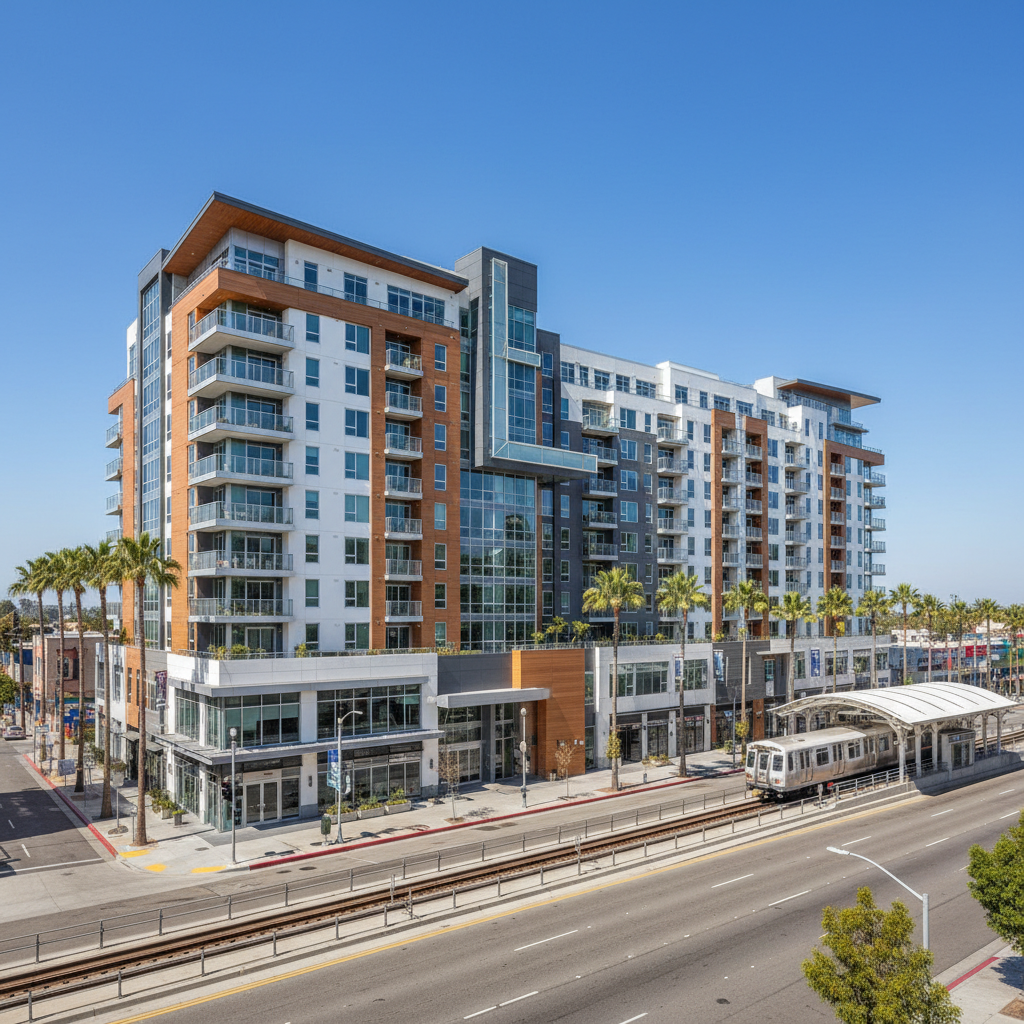
Success in the corporate housing market isn't just about the property; it's about the proximity to specialized industry hubs. A prime example of this is the recent spotlight on Living at NoHo in North Hollywood, named the Featured Southern California Listing for March 2026 by Key Housing.
The Geography of Opportunity
North Hollywood (NoHo) has become a blueprint for strategic investment. By situating corporate housing within the Arts District, owners tap into the media, entertainment, and technology sectors of Los Angeles. As Bob Lee, President of Key Housing, noted, business travelers want the "magic of Hollywood" combined with the "convenience of a central LA location."
Identifying Your Local Magnet
Property owners should identify their own local magnets to replicate the NoHo success. In Southern California, these include:
- The Tech Coast (Irvine/OC): Ideal for long-term tech contractors at firms like Blizzard or Amazon.
- San Diego Biotech Hubs: Perfect for researchers and medical consultants near UCSD and Torrey Pines.
- Inland Empire Logistics Centers: High demand for operations managers and corporate auditors overseeing the massive supply chain infrastructure in Ontario and San Bernardino.
By marketing properties as being "corporate ready" in these specific locales, owners can command premiums that far exceed standard market rents.
3. Operational Alchemies: Transitioning to the 'Home-Away-From-Home' Model
Transitioning a property from a bare-walls rental to a furnished corporate suite requires more than just a trip to a furniture store. It requires a process we call "Operational Alchemy"—turning standard residential space into high-value hospitality inventory.
Modular Furnishing and Smart Design
To attract business travelers, your unit must be functional. This means installing high-speed Wi-Fi (fiber optic where available), a dedicated ergonomic workspace, and modular furniture that allows the space to feel open yet cozy. In 2026, the "digital-first" guest expects smart home integration, including keyless entry (essential for 24/7 check-ins) and smart thermostats to manage energy costs remotely.
Curating the Experience
The 2026 business traveler is looking for an authentic local experience. Success in the NoHo district is attributed to proximity to artisan cafes and cutting-edge galleries. As a property owner, you should provide a "hyper-local" guide for your guests, highlighting the best foodie experiences in San Diego or the hidden gems of the Inland Empire. This adds perceived value that justifies high-yield rates.
Practical Amenities Checklist:
- Productivity: Dual monitors, high-speed mesh Wi-Fi, and universal charging stations.
- Comfort: Premium linens, a fully stocked Nespresso or local coffee station, and black-out curtains for those working different time-zone shifts.
- Compliance: Ensure that your short-term or mid-term rental (MTR) strategy aligns with local ordinances, such as LA’s Home-Sharing Ordinance or the specific zoning laws in Orange County.
4. Mitigating the Turnover Tax: Managing Executive Stays
The primary objection to the micro-stay model is the "turnover tax"—the increased cost of cleaning, maintenance, and administrative effort required when switching guests every 30 to 90 days. However, with professional property management, these costs can be neutralized.
Professional Maintenance Schedules
Frequent turnovers actually allow for more regular property inspections. Under a 12-month lease, a landlord might not see the interior of a house for a year, allowing minor leaks or damage to escalate. With executive stays, our maintenance teams at McIntire Kingstone perform "micro-inspections" during every cleaning, ensuring the property remains in pristine condition.
California Law and Short-Term Stays
It is vital to navigate the legal landscape carefully. In California, many local municipalities have strict rules regarding stays of less than 30 days. To avoid the complexities of the California Tenant Protection Act (AB 1482) while staying within legal bounds, many owners are focusing on "mid-term rentals" (30-90 days). This duration is the "sweet spot" for corporate housing—it offers high yield without the daily turnover hassle of Airbnb and often falls outside the stricter short-term rental (STR) bans.
Using Tech to Reduce Friction
Automating the guest journey is the most effective way to mitigate turnover costs. From automated messaging to digital check-in guides, reducing the need for manual intervention keeps overhead low and owner profits high.
5. Future-Proofing: Portfolio Diversification in Southern California
The ultimate goal of the "Corporate Chameleon" is not to abandon traditional rentals entirely, but to seek a balanced, diversified portfolio that can withstand regional volatility. While the 2026 Dwellsy index shows a softening in multi-family rents, it also proves that demand for housing remains high—it has just shifted in form.
The Hybrid Strategy
At McIntire Kingstone, we recommend a hybrid approach. For a portfolio with multiple units, consider dedicating 60-70% to stable, long-term residential leases to cover the "nut" (mortgages, taxes, insurance), and 30-40% to high-yield corporate housing. This 40% serves as your profit accelerator, capturing the higher margins of the business travel market.
Regional Flexibility
The SoCal market is not a monolith. While Los Angeles may have high demand for entertainment-related stays, San Bernardino might see a surge in logistics-driven executive stays. By diversifying geographically across the Inland Empire, Orange County, and San Diego, owners can hedge against localized economic downturns.
Staying Ahead of the Curve
As we head toward 2027, the line between "living" and "traveling" will continue to blur. The rise of nomadic professional roles means that the demand for high-quality, furnished, flexible housing will only grow. Property owners who treat their rentals as a service rather than just a commodity will be the ones who dominate the Southern California market.
Conclusion: Partnering for Success
Transitioning to an executive micro-stay model offers significant rewards, but it requires a sophisticated level of management that many individual landlords find overwhelming. From navigating California's evolving tenant laws to managing high-frequency maintenance and master-leasing arrangements, the operational demands are intense.
McIntire Kingstone is uniquely positioned to help property owners in Los Angeles, Orange County, Riverside, and beyond make this transition. We understand the nuances of the SoCal market, from the artsy vibes of NoHo to the corporate corridors of Irvine. By leveraging our expertise, you can transform your property into a high-performance asset that thrives in the 2026 economy.
Ready to unlock the potential of your Southern California rental? Contact the experts at McIntire Kingstone today for a comprehensive portfolio review and see how the "Corporate Chameleon" strategy can work for you.
 .5B Bets on the SoCal Rent Silence" class="w-full h-40 object-cover transition-transform duration-300 group-hover:scale-105" loading="lazy"/>