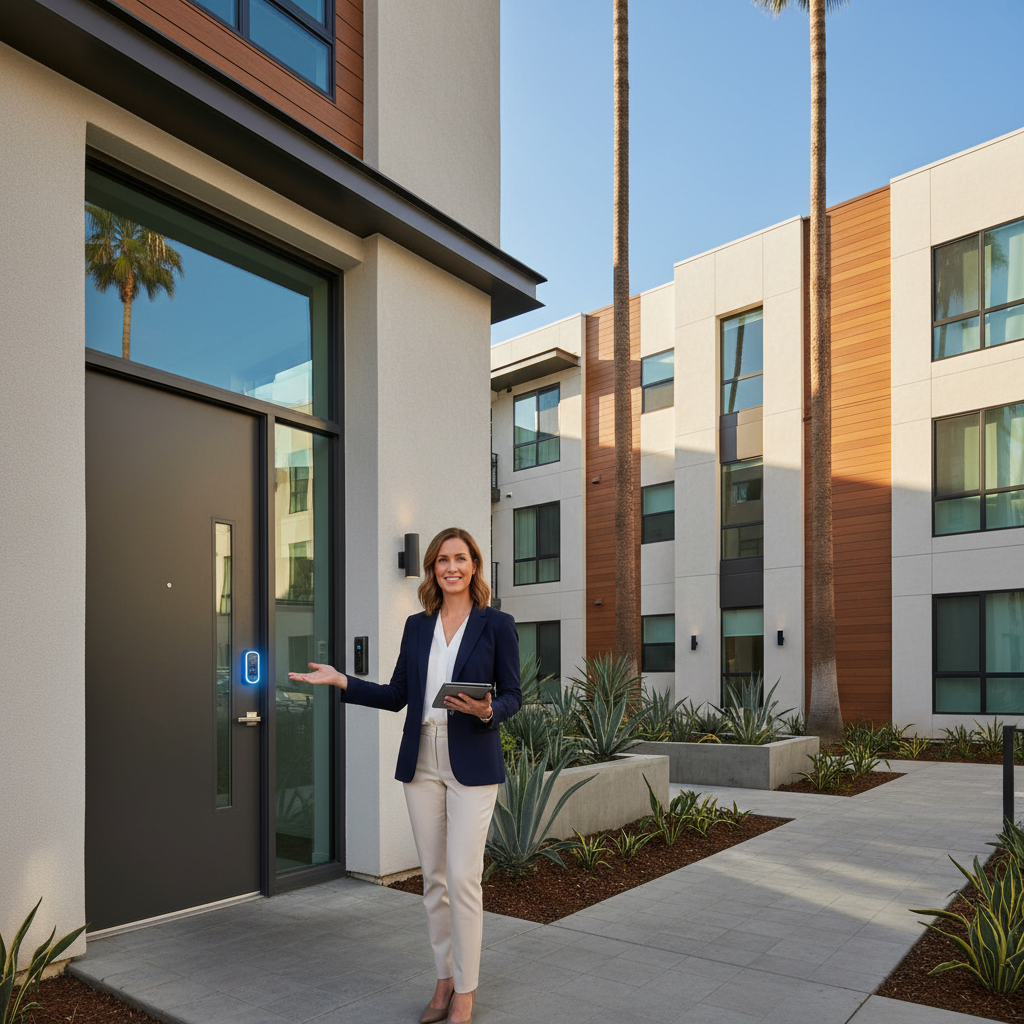
Navigating the New Landscape of HUD Citizenship Verification
For property owners in Southern California, from the high-rises of Los Angeles to the suburban communities of the Inland Empire, the regulatory landscape is shifting once again. As of April 2026, a significant tension has emerged between federal housing directives and California’s robust tenant protection laws. The Department of Housing and Urban Development (HUD) has proposed a rule that would revise regulations to require the verification of U.S. citizenship or eligible immigration status for all applicants and recipients of federal housing assistance.
For many property owners in San Diego, Riverside, and Orange County who participate in Section 8 or other HUD-assisted programs, this represents a potential administrative and legal minefield. At McIntire Kingstone, we understand that your primary goal is to maintain a profitable, compliant, and harmonious investment. However, these proposed changes threaten to cast landlords in the role of "immigration police," a position that is not only uncomfortable but potentially illegal under California state law.
The California Catch-22: Federal Mandates vs. State Protections
The core of the issue lies in a direct conflict of interest between jurisdictions. While HUD may move toward stricter documentation requirements, California has long led the nation in protecting tenants from inquiries into their immigration status. Under existing California law, landlords are generally prohibited from inquiring about, or requiring disclosure of, a tenant’s immigration status as a condition of rental, unless such inquiry is required by a specific federal program.
The Risk of Being the 'Immigration Police'
The Southern California Rental Housing Association (SCRHA) recently submitted a comment letter to HUD expressing deep concern over these proposed changes. The primary worry is that by forcing housing providers to verify immigration status for all assisted households, the federal government is shifting the burden of immigration enforcement onto private citizens and property management firms. In California, doing so aggressively can lead to lawsuits under the Unruh Civil Rights Act or the California Fair Employment and Housing Act (FEHA).
If you own property in Los Angeles or San Bernardino, you are operating in an environment where tenant advocacy is highly active. Misstepping during a documentation request could lead to accusations of harassment or discrimination, even if you are simply trying to maintain your federal subsidy eligibility. This "Catch-22" requires a delicate balance: satisfying HUD’s reporting requirements without violating California’s prohibition on status-based discrimination.
Preserving the Landlord-Tenant Bond in a Climate of Fear
The strength of a real estate investment often rests on the stability of the resident base. In multi-generational households, which are common throughout the Inland Empire and Riverside, a single request for citizenship documentation can spark fear and lead to a mass exodus of reliable tenants. This "climate of fear" is detrimental to property values and community stability.
Communication Strategies for Sensitive Requests
When federal law requires new documentation, the how is just as important as the what. To preserve your rapport with residents, consider the following approach:
- Neutral Messaging: Frame the request as a mandatory federal administrative update rather than a personal inquiry. Use phrases like "New Federal compliance guidelines for the housing assistance program" rather than "We need to see your papers."
- Consistency is Key: Under Fair Housing laws, you cannot selective-request documents from people who "look" or "sound" like they might not be citizens. If the HUD rule applies to a specific program, every single participant in that program must receive the exact same notice.
- Language Access: In diverse regions like Orange County and San Diego, providing notices in Spanish, Vietnamese, or Tagalog (depending on your local demographic) demonstrates respect and ensures the message isn't lost in translation.
Fair Housing Month: Education as Your Best Defense
As we observe Fair Housing Month this April, it is a vital reminder that education is the most powerful tool in a landlord’s arsenal. Alan Pentico of the SCRHA recently highlighted that fair housing education must be an ongoing part of daily operations. This is especially true when navigating the intersection of federal housing subsidies and immigration status.
The Dangers of Unintended Discrimination
Implicit bias can often creep into the verification process. For example, a property manager might inadvertently spend more time verifying the documents of a family with a non-English surname than they do for others. This creates a disparate impact, which is a grounds for a Fair Housing claim. Actionable advice: Establish a written, standardized protocol for document collection. Every tenant should be given the same checklist, the same deadline, and the same point of contact for questions.
The Role of Professional Training
At McIntire Kingstone, we advocate for comprehensive training for all on-site staff. Whether it's a resident manager in a Los Angeles complex or a maintenance tech in Riverside, everyone representing the owner must understand that immigration status is a protected characteristic under California law. Training should focus on the limitations of what can be asked and the legal ways to handle sensitive information once it is received.
Proactive Transparency with Multi-Generational Households
Southern California is home to many mixed-status households where some family members may be citizens while others are in the process of adjusting their status. The HUD verification battle is particularly stressful for these families. To mitigate this stress and prevent unnecessary vacancies, proactive transparency is essential.
Explaining Legislative Changes
Don't wait for your tenants to hear rumors on the news. If your property is subject to HUD oversight, provide a proactive informational flyer that explains:
- What the new HUD proposal actually says.
- That these are federal requirements, not owner-initiated changes.
- The specific timeline for implementation (if known).
- Resources for legal aid or tenant advocacy groups that can help them understand their rights.
By positioning yourself as a source of accurate information rather than an adversary, you build long-term loyalty. This transparency helps maintain the "human element" of property management, which is often lost in technical legal disputes.
Practical Compliance Steps for Southern California Owners
While we wait for the final ruling on the HUD citizenship verification proposal, there are several steps you can take today to protect your investment in the Inland Empire, San Diego, or Los Angeles:
- Audit Your Current HUD Contracts: Know exactly which federal programs govern your units. Is it Section 8 Project-Based? Tenant-Based Vouchers? Section 202? Each may have different implementation timelines.
- Review California SB 183 and AB 291: Familiarize yourself with California’s “Immigrant Tenant Protection Act,” which prohibits landlords from using a tenant’s immigration status against them in most residential contexts.
- Consult with Professional Management: A company like McIntire Kingstone stays abreast of these minute-by-minute changes. We handle the documentation and the delicate conversations so you don't have to risk legal exposure.
- Monitor Local Ordinances: Cities like Los Angeles often have additional layers of tenant protection that may be even stricter than state law. Ensure your documentation requests don't trigger a violation at the municipal level.
The Impact of Broader Housing Trends
It is important to view these HUD changes within the context of the broader Southern California market. For instance, recent discussions around Measure ULA (the "Mansion Tax") in Los Angeles show how local tax and housing policies can inadvertently create barriers to affordability. Similarly, if HUD verification rules become too burdensome, many private landlords may choose to opt-out of federal assistance programs entirely. While this might seem like a way to avoid the "Citizenship Checkpoint," it could also lead to higher vacancy rates or a loss of guaranteed rental income in an uncertain economy.
At McIntire Kingstone, our philosophy is that knowledge is the best hedge against market volatility. Whether we are dealing with new resident manager bill amendments in the California legislature or federal HUD mandates, our focus remains on protecting the owner’s equity while ensuring a high standard of living for residents. In the coming months, we will continue to monitor the SCRHA and NAA advocacy efforts to ensure our clients are never caught off guard.
Conclusion: Leading with Professionalism and Integrity
The "Citizenship Checkpoint" doesn't have to be a point of conflict. By approaching HUD verification with a commitment to Fair Housing principles, transparent communication, and a deep understanding of California law, you can navigate these emerging battles successfully. Investing in Southern California real estate remains one of the most lucrative opportunities in the country, provided you have the right team to handle the complexities of the modern regulatory environment.
If you have questions about how these HUD proposals might affect your portfolio in Orange County, Riverside, or beyond, reach out to McIntire Kingstone. We are here to provide the expertise and peace of mind you need to thrive as a property owner in the Golden State.